
Reliability is the real fixed-blade argument
A fixed blade can't fail to open because it's never closed. We treated that mechanical certainty as the category's core advantage, not a marketing footnote.
Home / Buying Guides / Fixed-Blade vs. Mechanical Broadheads
The real tradeoff — deployment reliability versus cutting diameter and flight.
The fixed-blade vs. mechanical debate isn't about which broadhead is objectively better — it's about which tradeoff you'd rather make. Fixed blades can't fail to deploy; mechanical blades fly straighter and open wider on impact. Both facts are true at the same time, which is why this argument doesn't have a single right answer.
Below are two real fixed-blade picks and two real mechanical picks from our catalog, plus a breakdown of when each style actually makes sense. For a full buying guide with more options, see Best Broadheads or Best Broadheads for Elk Hunting.
This comparison is built around the actual tradeoff — deployment reliability versus cutting diameter and flight — using real fixed-blade and mechanical broadheads already in our catalog rather than a generic pros-and-cons list.
A fixed blade can't fail to open because it's never closed. We treated that mechanical certainty as the category's core advantage, not a marketing footnote.
Mechanical heads fly like field points and open to a larger cutting diameter on impact. We weighed that blood-trail advantage against the added moving parts honestly, rather than picking a side.
Not every mechanical head is rated for higher crossbow velocities. Where a pick is specifically built or rated for crossbow speeds, we called that out rather than assuming interchangeability with vertical-bow broadheads.
Unless a page explicitly says a product was tested hands-on by HuntGearGuide, recommendations are based on product specifications, owner review data, merchant/manufacturer information, and practical hunting-use fit. Prices, ratings, review counts, and availability are point-in-time snapshots, so confirm the current merchant listing before buying.
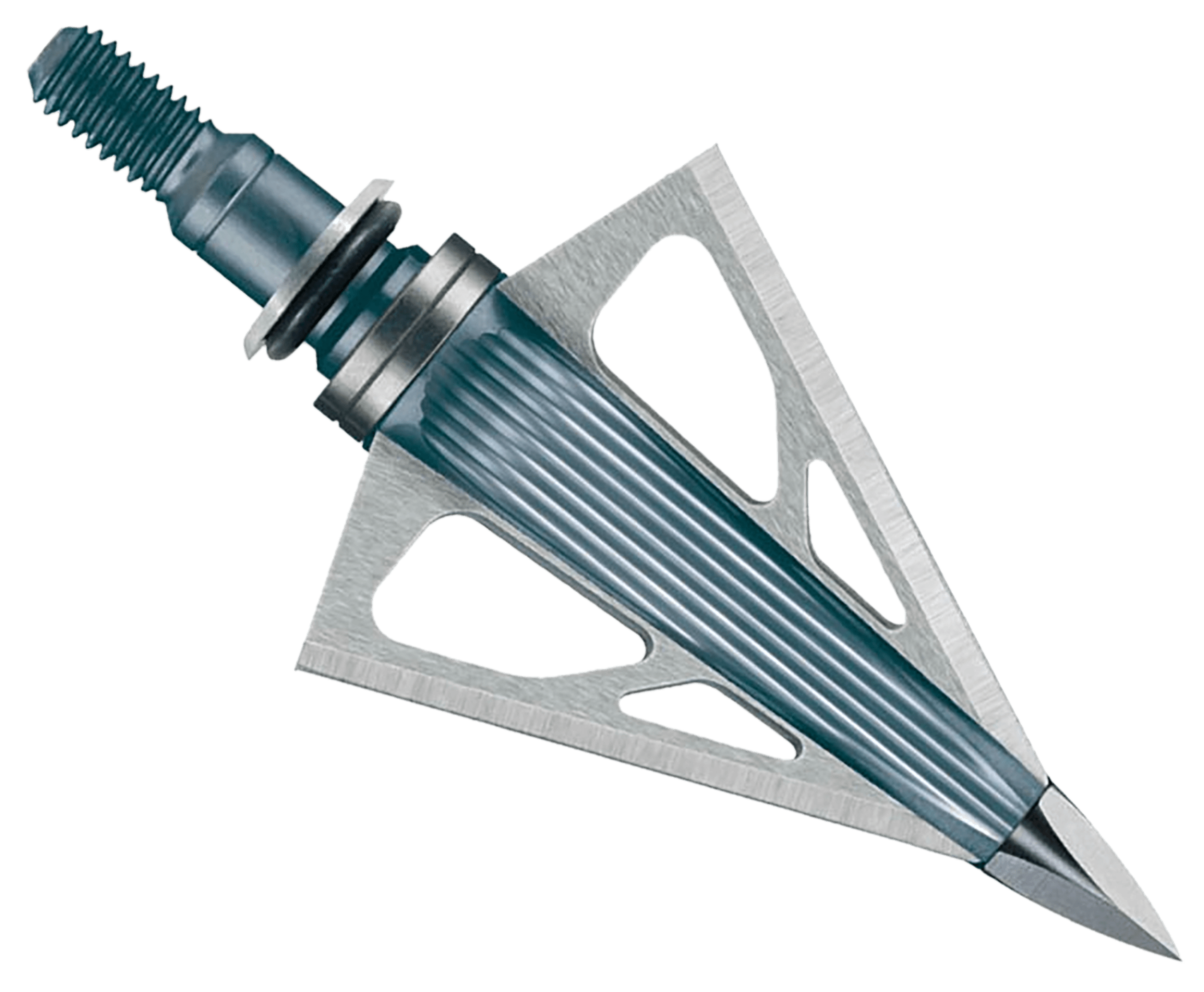
NAP Thunderhead is a long-running hunting standard for a reason — a razor-sharp fixed 3-blade design that can't fail to deploy, built for consistent penetration shot after shot.
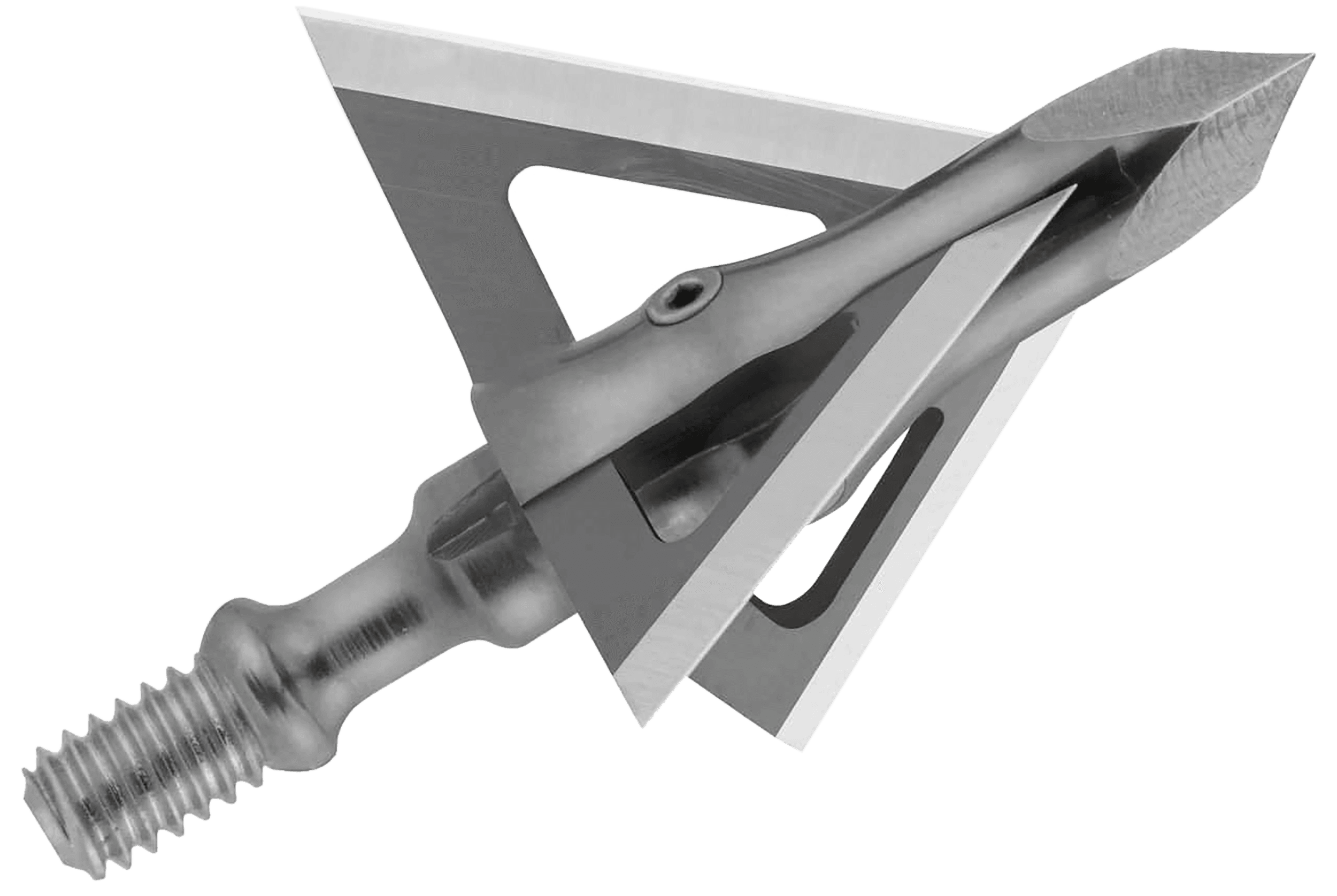
The one-piece stainless ferrule and bone-crushing Trocar tip are built specifically to punch through bone contact without deflecting — a real advantage on quartering shots.
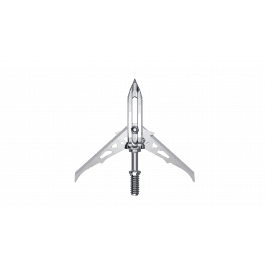
Ravin's 416 steel mechanical head opens to a full 2-inch cutting diameter, with a single-piece ferrule and internal spring clip that skips the lock rings and o-rings common to cheaper mechanical designs.
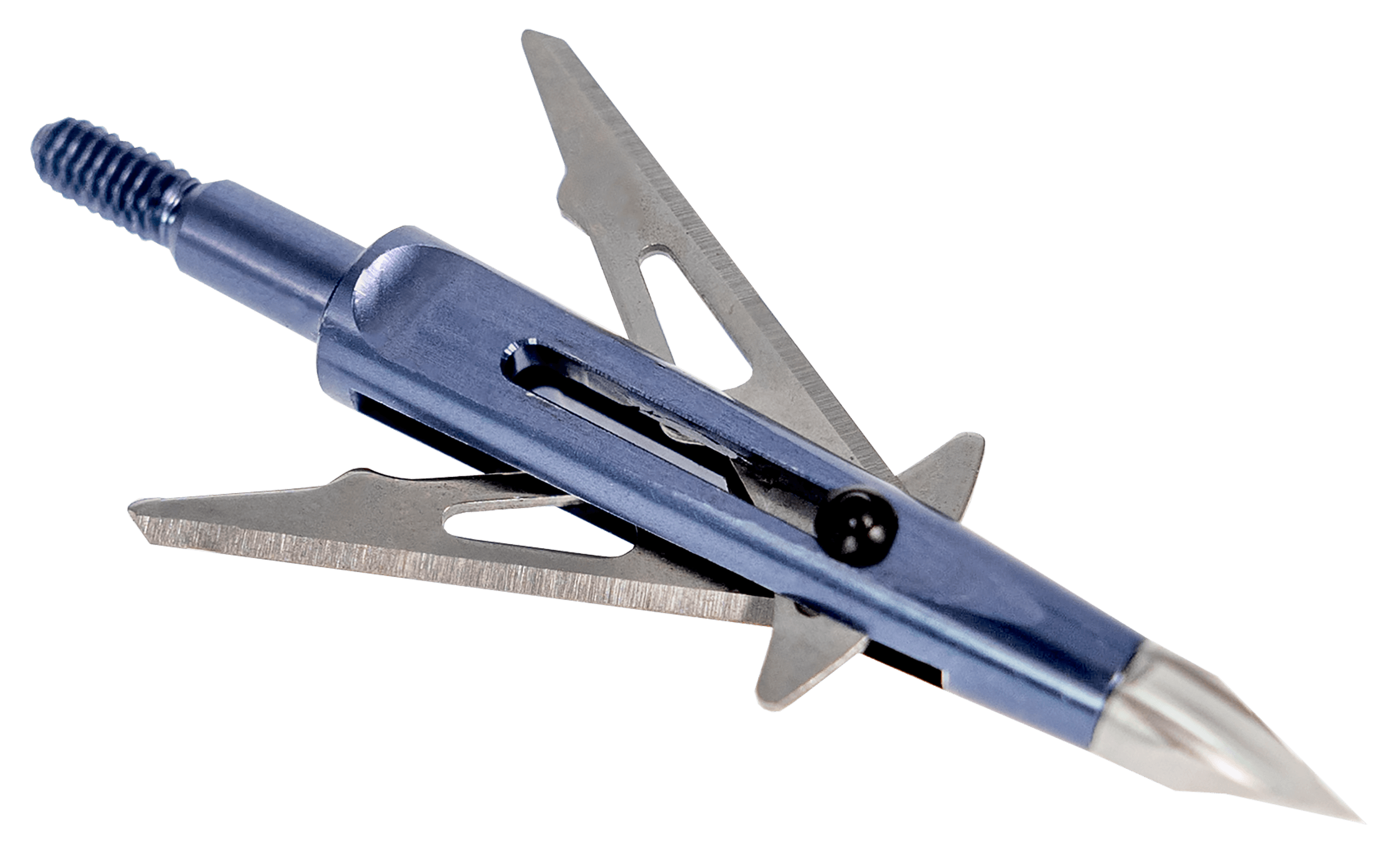
Field-point accuracy in flight plus a 2-inch cutting diameter on impact, held closed by a simple spring-clip mechanism until contact — a lower-cost entry into mechanical performance.
A fixed blade is never in a closed state waiting to open — there's no moving part that can fail to deploy on a marginal hit. For hunters who prioritize certainty over cutting diameter, that's the whole argument.
Mechanical heads fly closer to field points (easier to sight in) and open to a larger cutting diameter on impact than most fixed-blade designs, which can mean a more visible blood trail on a well-placed shot.
On quartering shots that catch a rib or shoulder, a fixed blade like the Muzzy Trocar is built to punch through rather than deflect or fail to open. Mechanical heads are more sensitive to marginal hits.
Some mechanical heads aren't rated for higher crossbow velocities. Check that a mechanical broadhead is specifically rated for crossbow speeds before assuming it works the same as it would from a compound bow.
You hunt elk or other tough, bone-heavy game, want the simplest possible reliability story, or you're not confident in your broadhead tuning.
You want field-point-like flight for easier sighting in, you're hunting deer-sized game at typical ranges, and your crossbow or bow speed matches the head's rating.
Yes, in the sense that matters most — a fixed blade has no moving parts that need to open on impact, so it can't fail to deploy. Mechanical heads trade some of that certainty for a larger cutting diameter and field-point-like flight.
Generally yes — mechanical broadheads stay closed in flight, so they behave more like field points and are easier to sight in without extensive broadhead-specific tuning. Fixed-blade heads have exposed blades that can catch more air and require more careful tuning.
Fixed-blade designs are generally favored for elk-sized game because of the higher likelihood of hitting bone on a quartering shot. A fixed blade built for penetration, like the Muzzy Trocar, is less likely to deflect or fail to perform on a hard hit than a mechanical head.
Not always. Some mechanical broadheads aren't rated for the higher speeds modern crossbows generate. Check the manufacturer's crossbow-speed rating before pairing a mechanical head with a fast crossbow.
See the full broadhead lineup with more fixed and mechanical options across every budget.