Rangefinders shop hero

Shop / Rangefinders

Rangefinders

Rangefinders should be fast, readable, and simple under pressure. For hunting, prioritize realistic distance needs, target lock behavior, magnification, and low-light usability over maximum range claims.

Top Rangefinders Picks

Sourced and verified real specs, prices, and ratings — see the full breakdown in our buying guide.

Vortex Crossfire HD 1400 Laser Rangefinder
Best Overall

Vortex Crossfire HD 1400 Laser Rangefinder

★★★★½(1,143)

Range out to 1,400 yards with the Vortex Crossfire HD 1400, delivering angle-compensated HCD readings, a bright red TOLED display, and Vortex's unlimited lifetime warranty in a lightweight body built for bow and rifle hunters alike.

Leupold RX-1400i TBR/W Gen 2 Rangefinder
Best Ballistic Calculator

Leupold RX-1400i TBR/W Gen 2 Rangefinder

★★★★½(429)

Get ballistically-calculated ranges with the Leupold RX-1400i TBR/W Gen 2, using True Ballistic Range/Wind technology to hand rifle hunters a wind hold out to 800 yards while a selectable Flightpath bow mode gives archers angle-compensated ranges and obstruction warnings.

Bushnell Bone Collector 1000 Rangefinder
Best for Beginners

Bushnell Bone Collector 1000 Rangefinder

★★★★½(216)

Get true horizontal distances on hilly terrain with the Bushnell Bone Collector 1000, using ARC (Angle Range Compensation) technology and a fast 4-times-per-second scan mode in a budget-friendly package built for both bow and rifle hunters.

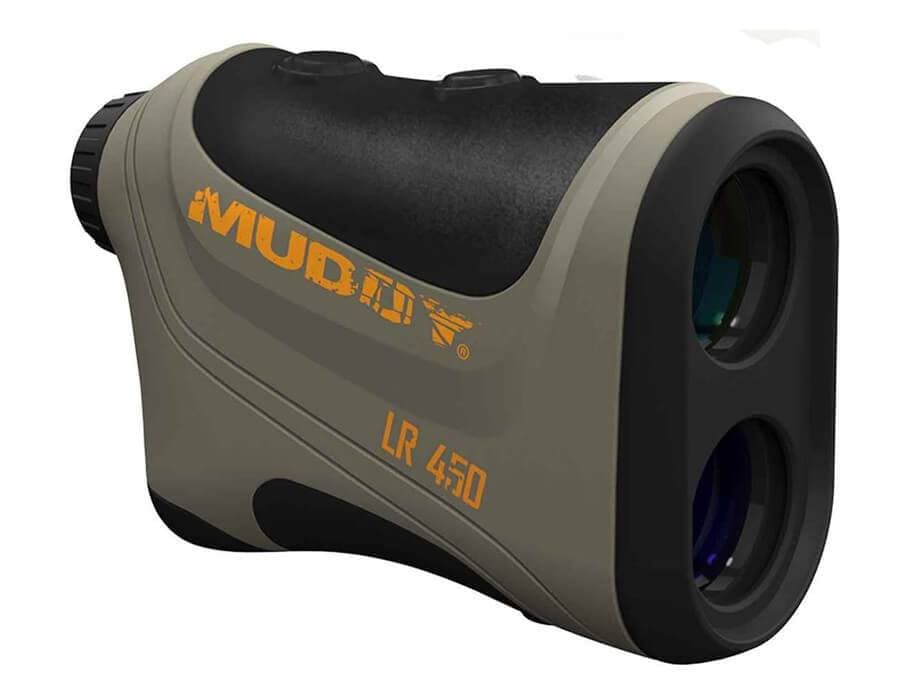
Muddy Outdoors LR450 Rangefinder 7x24mm
Best Budget

Muddy Outdoors LR450 Rangefinder 7x24mm

Travel light without losing accuracy with the Muddy LR450 Rangefinder, ranging up to 450 yards with 7x magnification and IPX7 waterproof housing.

Side-by-side specs for the picks above — see the full lineup in the product grid below.
RangefinderPriceMax RangeMagnificationAngle Comp.Ballistic Calc.
Vortex Crossfire HD 1400 Laser Rangefinder$199.181,400 yd5xYesNo
Leupold RX-1400i TBR/W Gen 2 Rangefinder$199.991,400 yd6xYesYes
Bushnell Bone Collector 1000 Rangefinder$99.881,000 yd6xYesNo
Muddy Outdoors LR450 Rangefinder 7x24mm$83.49450 yd7xNoNo

Choose Your Starting Point

Rangefinder specs can look impressive while still being awkward in the field. The useful test is whether you can get a fast, readable distance in low light, from a real shooting position, before the animal moves.

Bow range

Look for quick readings and easy operation inside normal archery distances.

Sort by Price

Open country

Choose more range, clearer glass, and target modes that help on longer shots.

Sort by Rating

How to Choose Rangefinders

Use these checks before comparing the products below. They help separate useful field upgrades from nice-looking gear that does not fit your hunt.

Match range to real shots

Bowhunters need fast close readings; open-country hunters need clearer long-range pickup.

Prioritize readability

A rangefinder has to be easy to read quickly in low light and awkward shooting positions.

Keep controls simple

Simple buttons and dependable target lock matter when you are ranging under pressure.

Rangefinders FAQs

What range do I actually need?

Bowhunters rarely need more than 100 yards of real range — fast, accurate readings inside 60 yards matter more than max distance. Rifle hunters in open country benefit from 800+ yard range and angle compensation.

Is angle compensation necessary?

For treestand and mountain hunters, yes — a steep shot angle changes your true horizontal distance enough to matter. Flat-ground hunters can skip this feature and save money.

Do ballistic calculators matter for bowhunting?

Not really — those features are built for long-range rifle shooters. Bowhunters get more value from fast, simple readings and a clear display in low light.

Why does a rangefinder's max range not match what I get on a deer?

That advertised number ("1,400 yards," "1,800 yards") is almost always the reflective range — measured against a highly reflective target like a barn or road sign. Range on a deer-sized, non-reflective target is typically 40-60% of that figure, so a rangefinder rated for 1,400 yards might realistically range a deer at 700-750 yards. Check the product's actual game-range spec, not just the headline number, before comparing units on range alone.

What magnification is best for a hunting rangefinder?

5x to 7x covers most hunting situations. Higher magnification narrows your field of view and amplifies hand shake, which can make it harder to lock onto a target quickly at typical bow and rifle ranges — it matters more for glassing than for ranging.

Rangefinder or rangefinding binoculars — which is better for hunting?

A dedicated rangefinder is smaller, lighter, and usually cheaper for hunters who already carry separate binoculars. Rangefinding binoculars combine both tools into one unit, which is worth the extra size and cost mainly for western and open-country hunters who glass constantly and want one less thing in their pack.

Are expensive rangefinders worth it over budget models?

Under $150 buys reliable basic ranging and, on some models, angle compensation — plenty for most stand and blind hunters. $150-$350 typically adds a true onboard ballistic calculator (wind holds, not just angle correction), brighter HD glass, and a longer warranty. Above $350, you're mostly paying for extended max range and premium optical clarity that matters most to western and long-range rifle hunters — a bowhunter rarely needs to spend that much.

Disclosure: As an Amazon Associate, HuntGearGuide earns from qualifying purchases. Some links above are affiliate links from other partners too, at no extra cost to you. This helps us keep the tools free.