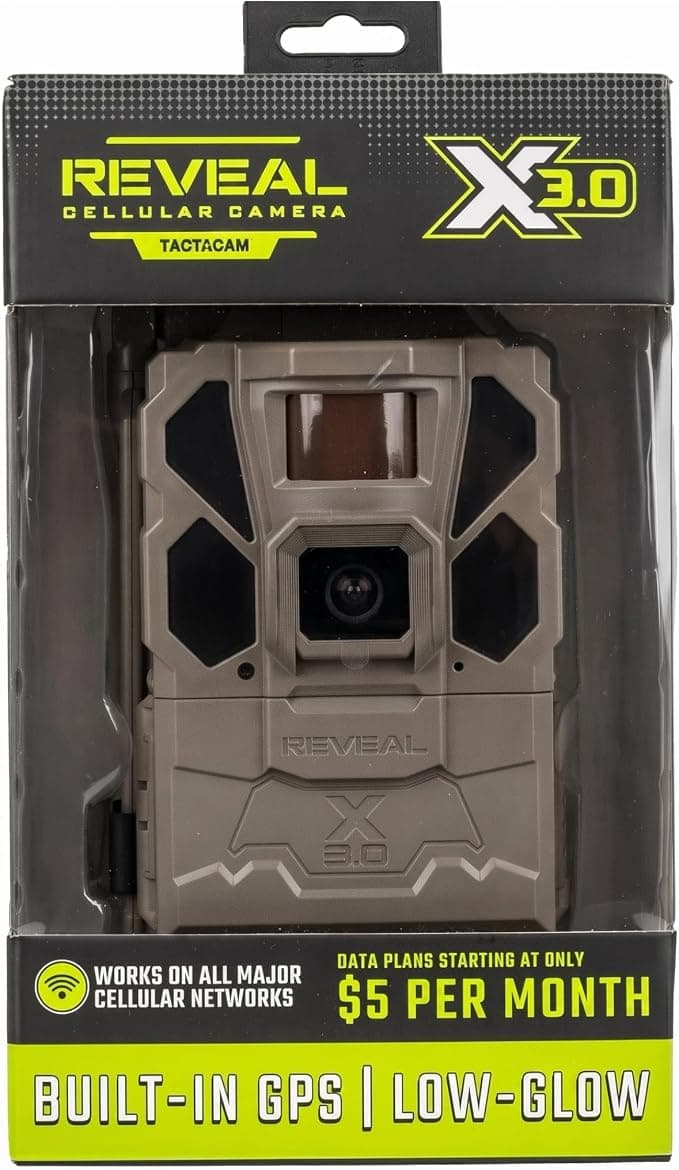
TACTACAM Reveal X 3.0 Cellular Trail Camera
Scout hands-off with the TACTACAM Reveal X 3.0 — auto-connect multi-carrier LTE and built-in GPS send photos straight to your phone with no SD card and up to 6+ months of battery life.

Shop / Trail Cameras
Trail camera shopping comes down to image quality, trigger speed, night performance, battery life, and how many cameras you need to cover a property. Start with the use case, then filter by price and rating.
Sourced and verified real specs, prices, and ratings — see the full breakdown in our buying guide.

Scout hands-off with the TACTACAM Reveal X 3.0 — auto-connect multi-carrier LTE and built-in GPS send photos straight to your phone with no SD card and up to 6+ months of battery life.

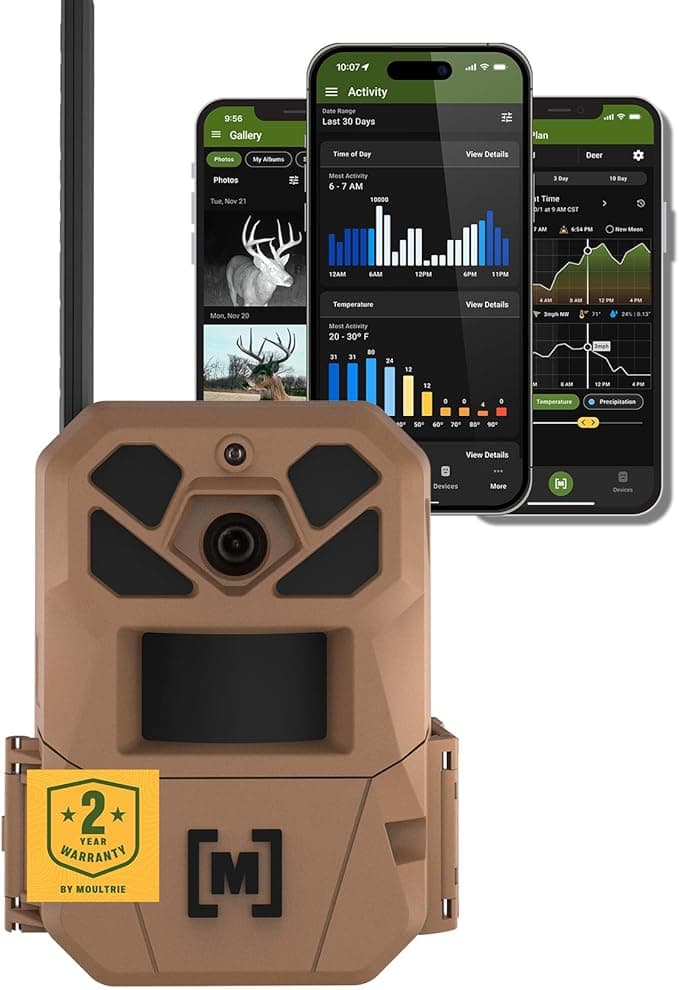
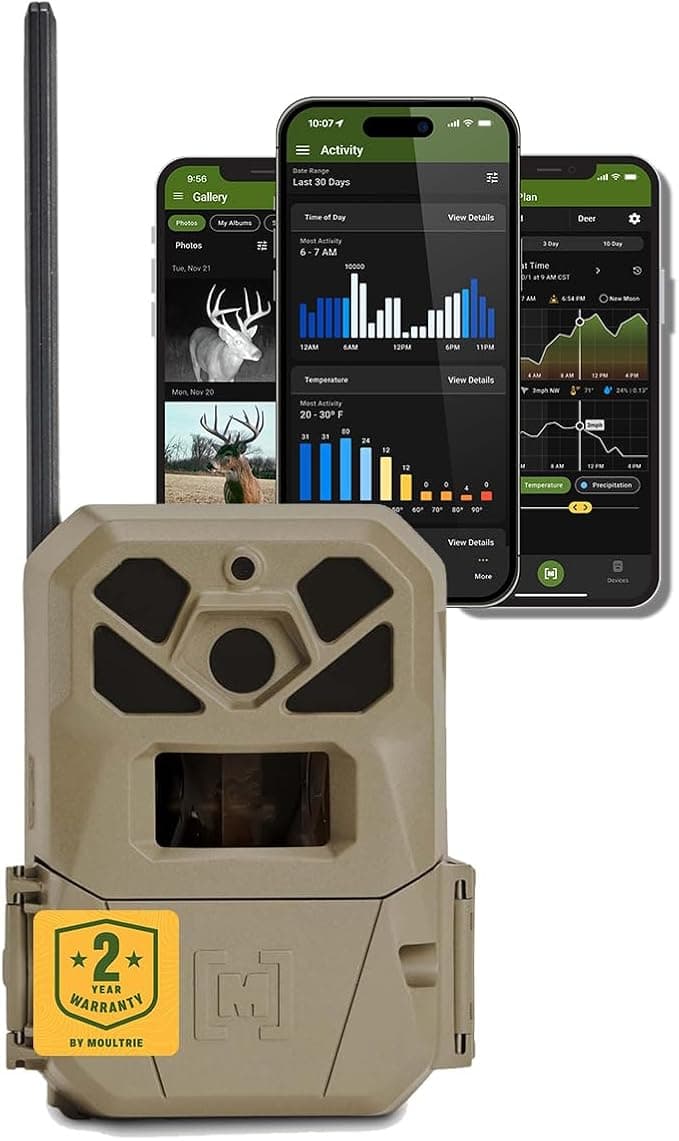
Moultrie's Edge 3 fires in half a second and auto-connects to four major carriers, sending 40MP photos and AI buck alerts straight to your phone — no SIM swapping, plans start at $9.99.

The Moultrie Edge 2 Pro pairs 40MP photos and 1440p HD video with AI buck detection and nationwide 4G LTE auto-connect, cutting false triggers so your feed is bucks, not blowing grass.

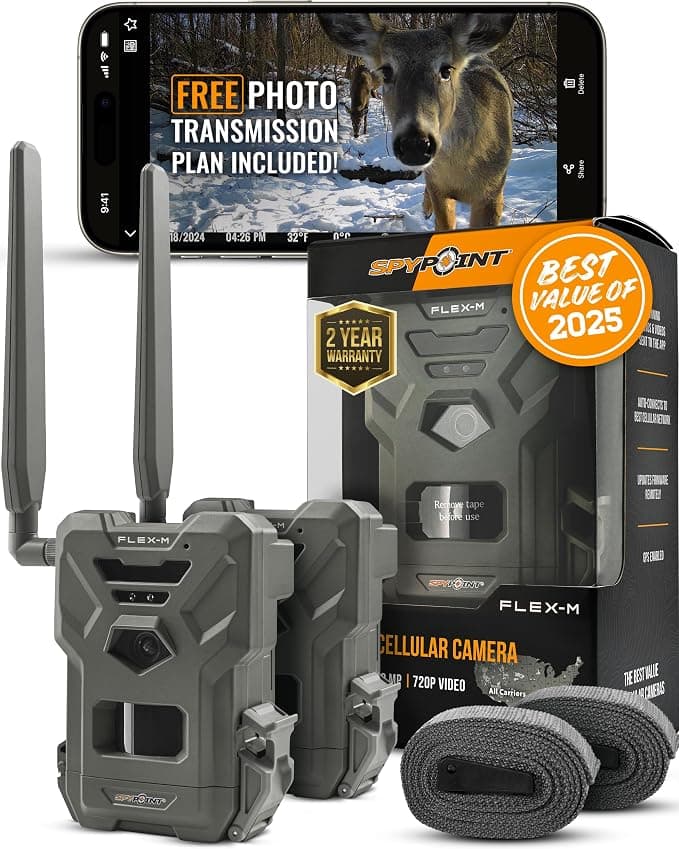
Cover two trails at once with the SPYPOINT Flex-M twin pack — dual-SIM LTE, GPS, and night vision deliver 28MP photos to your phone with no WiFi needed, at one of cellular scouting's lowest price points.
Trail camera value comes from coverage and trigger reliability more than headline photo resolution. If you're deciding between one premium camera and two budget units, more eyes on more trails usually wins for actual scouting.
Pick a simple setup with dependable motion detection before paying for premium extras.
Favor faster trigger speeds, wider detection, and better night images for your most important locations.
If you're covering multiple trails, food plots, or pinch points, two budget cameras usually beat one premium camera for actual scouting coverage. Save a premium single-camera budget for your highest-traffic location.
A lot — a camera with a slow trigger can miss a deer walking past at normal speed entirely. This matters more than photo resolution for most scouting purposes.
Cellular cameras save trips checking cards but cost more upfront and need a data plan. SD-card cameras are cheaper and simpler but mean physically checking each site, which can educate pressured deer if done too often.