
Safety
3 items
Home / Buying Guides / Turkey Hunting Gear Guide
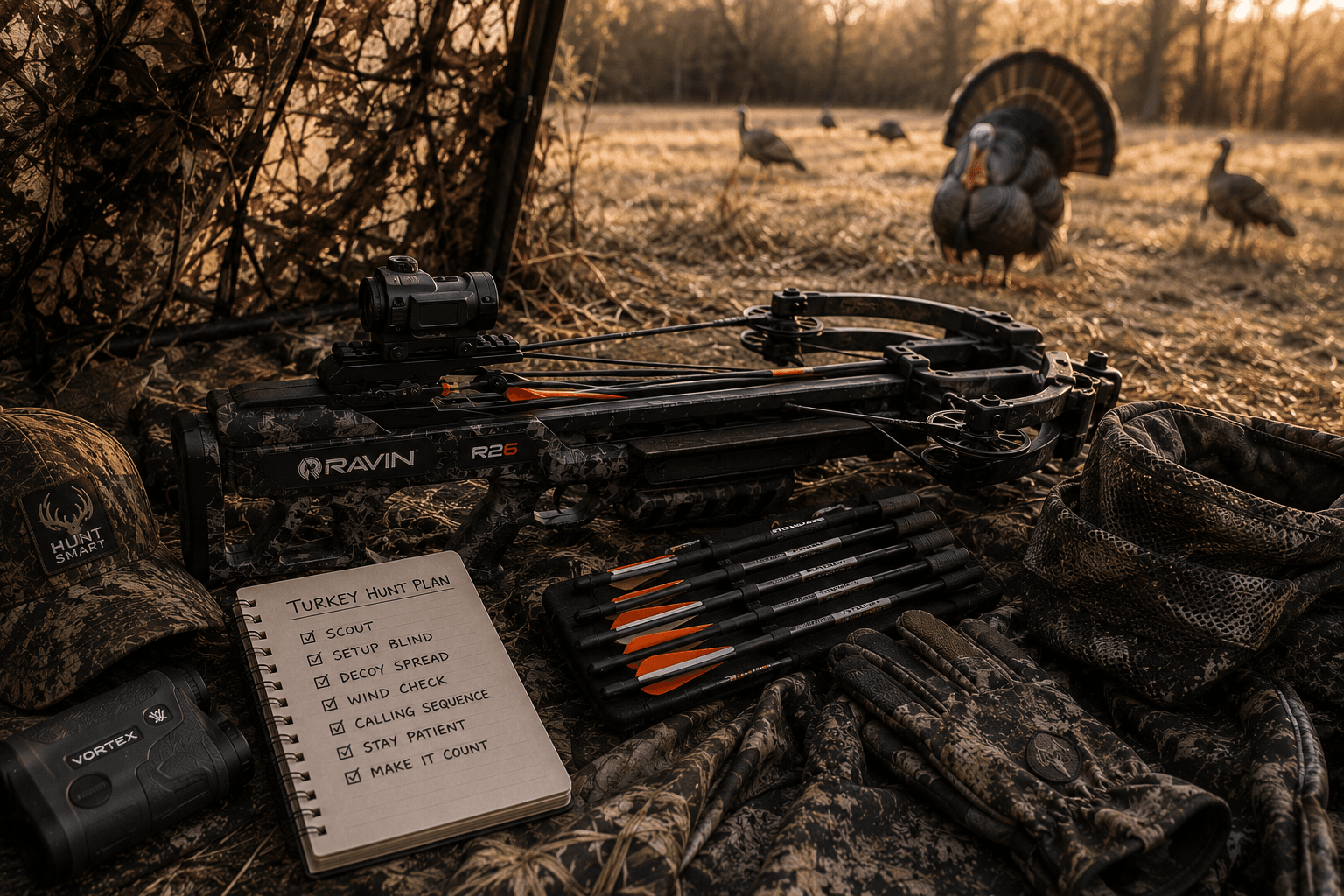
Cover concealment, calls, and weapon setup before opening day, whether you are running a ground blind or spot-and-stalk.
Turkey hunting rewards a different kind of preparation than deer or elk season. Concealment and calling matter as much as the shot itself, and a turkey's eyesight punishes any gap in your setup. This guide pulls together the main turkey items so you can verify your kit before the season starts.
It covers safety, clothing, weapon setup, field dressing, navigation, licenses, calls, and comfort items for a ground blind or spot-and-stalk sit. For a checkable version tailored to your experience level, use the Gear Checklist Generator; for weapon setup, see our best crossbow for turkey hunting picks. Make sure your hunting licenseand tags are squared away before you focus on gear, and confirm your state's opener on the hunting seasons page.
This guide is a fixed reference list. The Gear Checklist Generator builds a checkable, shareable version tailored to your experience level and hunt type.
Essentials come first, followed by recommended and optional turkey hunting gear.
3 items
5 items
Waterproof with 400g–800g insulation — match the weight to your climate and how much you'll be sitting vs. moving
View DealMerino wool or synthetic — keeps sweat away from skin
View DealWind and rain protection; scent-control a bonus
View DealWicks moisture and stays warm even when damp — key for all-day boot comfort
View DealCovers exposed skin for warmth and added concealment in cold weather
View Deal6 items
Scout terrain and identify game before moving
View DealCompare all binoculars →100–125 grain; practice with your chosen style
View DealCompare all broadheads →Match bolt weight and spine to your crossbow specs
View DealCrucial for accurate shot placement at unknown distances
View DealCompare all rangefinders →Pulls birds into range and gives them something to focus on besides you
View DealThe primary turkey load for most hunters — pattern-test your gun and choke with your specific shells before the season
View Deal2 items
Sharp gut-hook knife and bone saw
View DealCompare all field-dressing knives →Sanitary protection during field dressing
View Deal3 items
Know property lines, mark waypoints, navigate out in the dark
View DealBackup navigation if your phone dies
View Deal10,000mAh dual-port power bank — keeps your phone and GPS charged during all-day hunts
View Deal3 items
3 items
Required for first-time hunters in most states
Find your state license →Must be on your person at all times while hunting
Find your state license →Species-specific permit — required in virtually all states for turkey season
Find your state license →1 item
Box calls are easiest for beginners
View DealTurkeys have exceptional eyesight and pick up on movement and uncovered skin fast. Full camo, a face mask or paint, and gloves matter more here than for most other hunts.
A box or slate call is easy to learn but easy to sound unnatural with. Spend time practicing before opening day rather than figuring it out in the field.
It is easy to focus on calls and concealment and forget paperwork. Your turkey tag, license, and any hunter education requirements should be squared away before opening day.
A turkey hunting guide should include your license and turkey tag, full camo concealment, a box or slate call, weapon setup, a rangefinder, field dressing tools, navigation basics, and comfort items for a ground blind sit.
Concealment. Turkeys have excellent eyesight, so full camo including a face mask or paint and gloves matters more for turkey hunting than for most other hunts.
A box call is generally the easiest for beginners to learn — it is difficult to make a bad-sounding call with one. Slate calls take more practice but offer more control once you are comfortable.
Use the checklist generator if you want a version tailored to your experience level instead of a general turkey list.