
Safety
3 items
Home / Buying Guides / Waterfowl Hunting Gear Guide
Cover waders, decoys, non-toxic shot, and licensing before opening day, whether you're in a field blind or a boat.
Waterfowl hunting has its own set of legal requirements and gear priorities that don't carry over from deer or upland hunting. Non-toxic shot is a federal requirement, not a preference, and standing in a marsh or flooded field all morning demands different gear than a dry treestand sit. This guide pulls together the main waterfowl items so you can verify your kit before the season starts.
It covers safety, clothing, weapon setup, field dressing, navigation, licenses, calls, and comfort items for a blind or boat hunt. For a checkable version tailored to your experience level, use the Gear Checklist Generator. Make sure your hunting licenseand federal duck stamp are squared away before you focus on gear, and confirm your state's opener on the hunting seasons page.
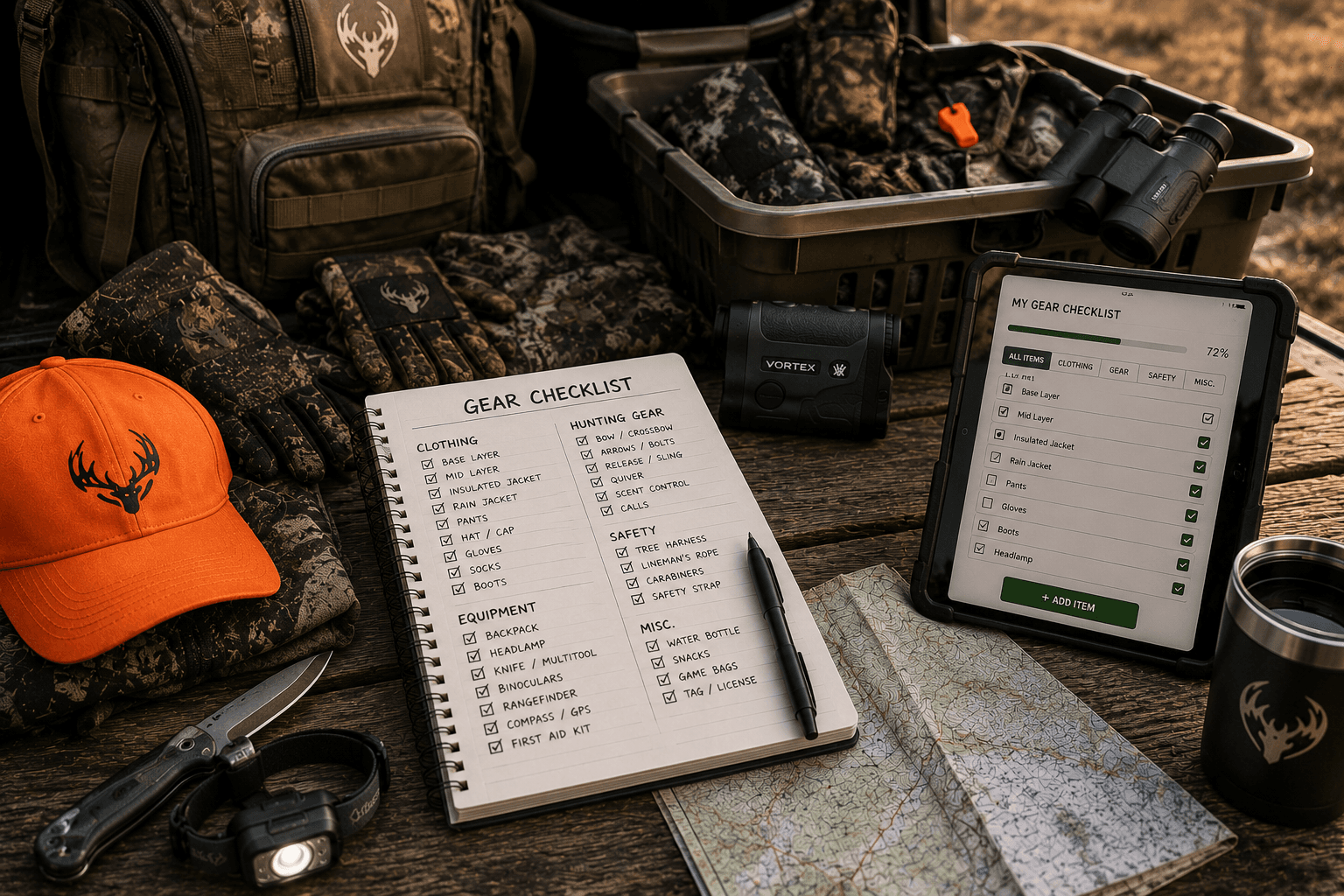
This guide is a fixed reference list. The Gear Checklist Generator builds a checkable, shareable version tailored to your experience level and hunt type.
Essentials come first, followed by recommended and optional waterfowl hunting gear.
3 items
4 items
For wading into marshes, flooded fields, and blinds — chest waders for deep water, hip waders for shallow
View DealWind and rain protection; scent-control a bonus
View DealWicks moisture and stays warm even when damp — key for all-day boot comfort
View DealKeeps hands warm without sacrificing the dexterity you need to handle a weapon or call
View Deal3 items
A dozen or more decoys to bring birds within range — species and spread matter as much as count
View DealFederally required for waterfowl — lead shot is illegal and will get you fined
View DealLow-profile concealment for field or open-water setups — pick based on where you're hunting
View Deal2 items
Sharp gut-hook knife and bone saw
View DealCompare all field-dressing knives →Sanitary protection during field dressing
View Deal3 items
Know property lines, mark waypoints, navigate out in the dark
View DealBackup navigation if your phone dies
View Deal10,000mAh dual-port power bank — keeps your phone and GPS charged during all-day hunts
View Deal4 items
Avoid crunchy wrappers that spook game
View DealStay hydrated during cold all-day sits
View DealSlip into pockets and gloves for all-day warmth
View DealFoam insulation under you prevents cold transfer on long sits
View Deal4 items
Required annually for all waterfowl hunters 16 and older — sold at post offices and many sporting goods stores
Find your state license →Required for first-time hunters in most states
Find your state license →Must be on your person at all times while hunting
Find your state license →Most states require an additional waterfowl stamp beyond the federal duck stamp
Find your state license →1 item
A single-reed or double-reed call to bring birds within range — practice before the season
View DealLead shot has been banned nationwide for waterfowl since 1991. Steel, bismuth, or tungsten loads are required — pattern-test whatever you choose before the season.
Standing in a marsh or flooded field is a different kind of cold than a dry treestand. Waders and layering that handle moisture matter as much as insulation.
Realistic decoy placement and a call you've practiced with bring birds into range. A perfect shot on a bird that never commits to the spread doesn't happen.
A waterfowl hunting guide should include your license, federal duck stamp, and any state waterfowl permit, chest or hip waders, non-toxic shotgun shells, decoys, a duck or goose call, field dressing tools, navigation basics, and comfort items for a long blind sit.
Lead shot has been federally banned for waterfowl hunting nationwide since 1991 because ingested lead pellets were poisoning waterfowl and the birds that feed on them. Steel, bismuth, and tungsten-based loads are the legal alternatives.
Yes. Every waterfowl hunter 16 or older needs a current federal duck stamp in addition to their state hunting license, and most states also require an additional state waterfowl stamp or permit.
Use the checklist generator if you want a version tailored to your experience level instead of a general waterfowl list.