
Safety
3 items
Home / Buying Guides / Predator & Coyote Hunting Gear Checklist
Thermal optics, calls, and decoys for coyote and predator hunting — plus the license rules that vary most from state to state.
Predator hunting — coyotes, fox, and other varmints — runs on a different gear list than deer or turkey season. Most of it happens after dark, calling is central to success instead of a nice-to-have, and the license and night-hunting rules vary more by state than almost any other hunt type. This checklist pulls together what actually matters: detection and shooting optics for the dark, calling and decoy gear to bring animals into range, and the licensing questions worth confirming before you go.
If you already carry night vision or thermal gear for scouting, you have a head start — see the night vision buying guide to compare options built for actual shooting use. Also targeting hogs on the same property? The hog hunting gear checklist shares a lot of this same equipment. For a checkable version tailored to your experience level, use the Gear Checklist Generator.
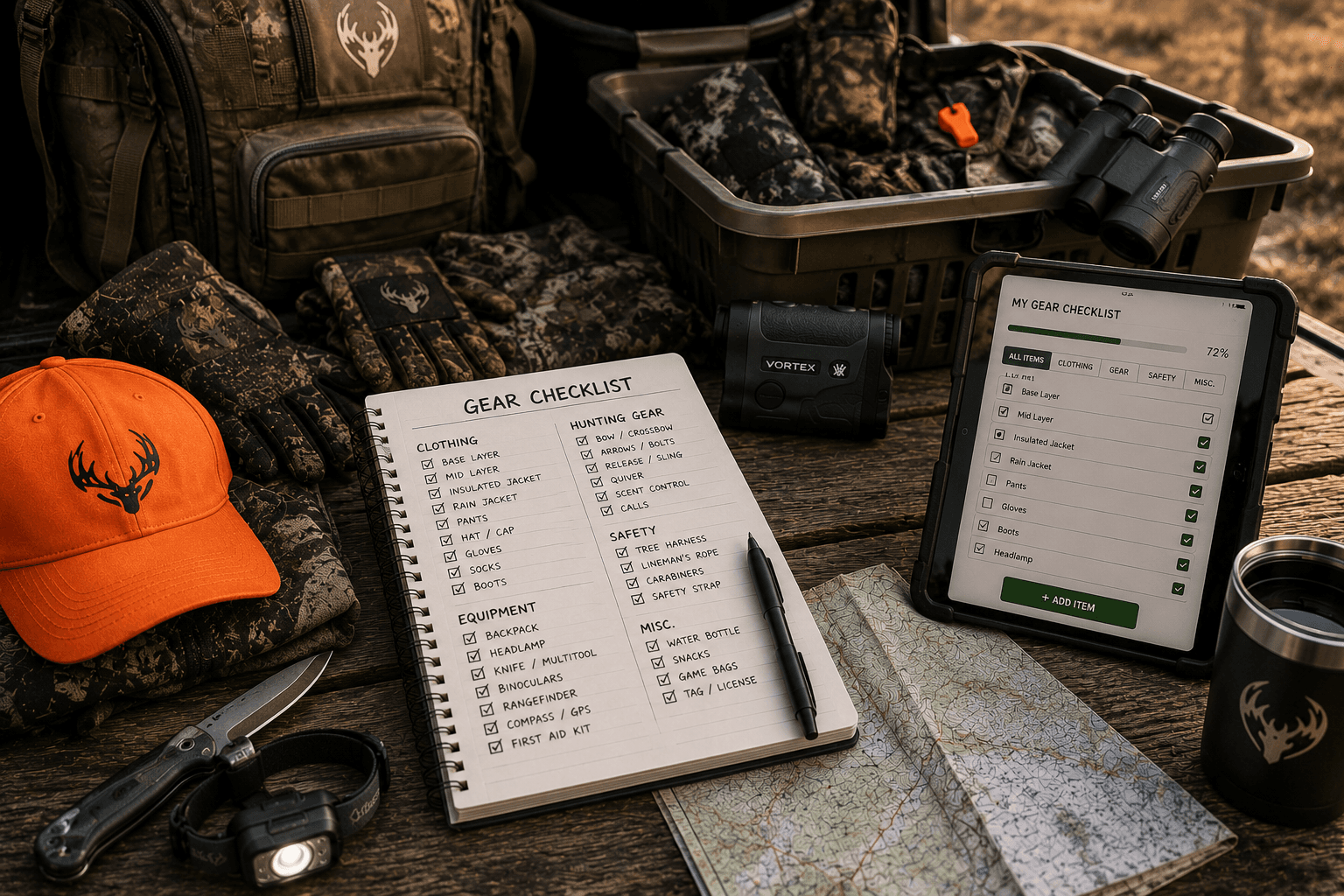
This guide is a fixed reference list. The Gear Checklist Generator builds a checkable, shareable version tailored to your experience level and hunt type.
Essentials come first, followed by recommended and optional predator hunting gear.
3 items
4 items
Wind and rain protection; scent-control a bonus
View DealWicks moisture and stays warm even when damp — key for all-day boot comfort
View DealCovers exposed skin for warmth and added concealment in cold weather
View DealKeeps hands warm without sacrificing the dexterity you need to handle a weapon or call
View Deal6 items
Scout terrain and identify game before moving
View DealCompare all binoculars →Crucial for accurate shot placement at unknown distances
View DealCompare all rangefinders →The core piece of gear for after-dark predator and hog hunts — detects heat signatures in total darkness where a standard scope or headlamp can't
View DealCompare all night vision →Gives calling coyotes and fox something to fixate on besides you, especially in open country where they can see a long way
View DealStabilizes shots; especially useful for new hunters
View DealExtend scouting into low-light and dusk conditions — useful for predator control and pre-dawn glassing
View DealCompare all night vision →2 items
Sharp gut-hook knife and bone saw
View DealCompare all field-dressing knives →Sanitary protection during field dressing
View Deal2 items
4 items
Avoid crunchy wrappers that spook game
View DealStay hydrated during cold all-day sits
View DealSlip into pockets and gloves for all-day warmth
View DealFoam insulation under you prevents cold transfer on long sits
View Deal3 items
Most states let you hunt coyote and other predators on a general license, but some require a furbearer license or have night-hunting restrictions — confirm before you go out after dark
Find your state license →Required for first-time hunters in most states
Find your state license →Must be on your person at all times while hunting
Find your state license →2 items
Keeps your hands free for your weapon and offers more varied, realistic sounds than a mouth call — most serious predator hunters run one
View DealA hand or mouth call mimicking a rabbit or rodent in distress — the basic tool for bringing coyotes and fox into range
View DealMost coyote and predator hunting happens after dark. A thermal or night vision riflescope (or a handheld thermal for detection) is the single piece of gear that separates a productive night hunt from sitting in the dark hoping to see movement.
A rabbit-in-distress or rodent squeal brings coyotes and fox into range far more reliably than sitting and waiting. An electronic call with a remote keeps your hands free for your weapon once something responds.
Predator hunting laws vary more by state than almost any other hunt type — artificial light restrictions, night vision equipment rules, and public vs. private land access all differ. Confirm the specifics before you plan a night hunt.
Most states allow predator hunting on a general hunting license, but some require an additional furbearer license, and rules on hunting hours and methods vary. Check your state's specific requirements before heading out.
Many states allow night hunting for coyotes and other predators, but the rules on artificial light, night vision or thermal equipment, and public vs. private land access vary significantly. Confirm your state's specific regulations before planning a night hunt.
At minimum: a rifle or shotgun suited to your local regulations, a predator or distress call (mouth call or electronic), a decoy to hold the animal's attention, and — if you're hunting after dark, which most predator hunters do — a thermal or night vision optic.
Use the checklist generator if you want a version tailored to your experience level instead of a general predator hunting list.