
Manufacturer specs, verified
Speed, draw weight, cocked width, and weight come directly from each brand's published spec sheet, not estimated or rounded for effect.
Home / Buying Guides / Ravin vs TenPoint
Two premium crossbow brands compared on the specs that actually matter in the field.
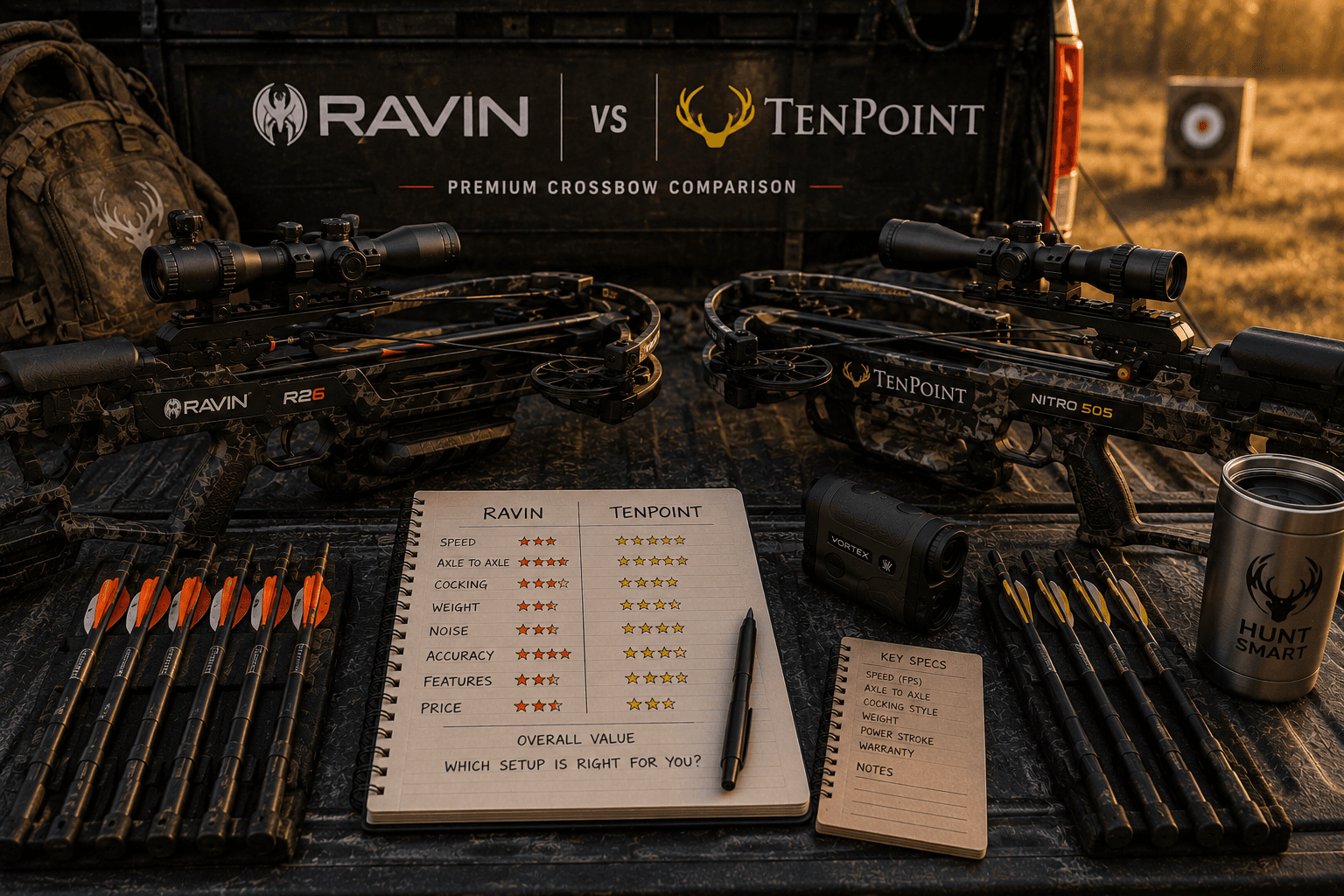
Ravin and TenPoint are the two biggest names in premium crossbows, and both the R10X Pro and the TX 440 land in the same general price tier. The gap isn't about which brand is "better" — it's about which real spec differences matter for how you actually hunt. TenPoint's TX 440 is faster and noticeably narrower when cocked; Ravin's R10X Pro is lighter and costs less.
Both bows use proprietary, silent cocking systems and ship as complete, ready-to-hunt packages. Neither is the wrong choice — the right one depends on whether width, speed, weight, or price matters most for your setup.
Both crossbows here are premium picks, so this comparison is built on manufacturer-published specs — speed, draw weight, cocked width, and weight — rather than treating one brand as automatically superior to the other.
Speed, draw weight, cocked width, and weight come directly from each brand's published spec sheet, not estimated or rounded for effect.
We focused on cocked width and cocking system because those are what a hunter actually feels in a treestand or blind, not just what looks impressive on a spec sheet.
The Ravin R10X Pro has an established owner review history. The TenPoint TX 440 is newer to our catalog and doesn't have public review data yet — we noted that difference rather than inventing a rating.
Unless a page explicitly says a product was tested hands-on by HuntGearGuide, recommendations are based on product specifications, owner review data, merchant/manufacturer information, and practical hunting-use fit. Prices, ratings, review counts, and availability are point-in-time snapshots, so confirm the current merchant listing before buying.
Newly listed — no reviews yet
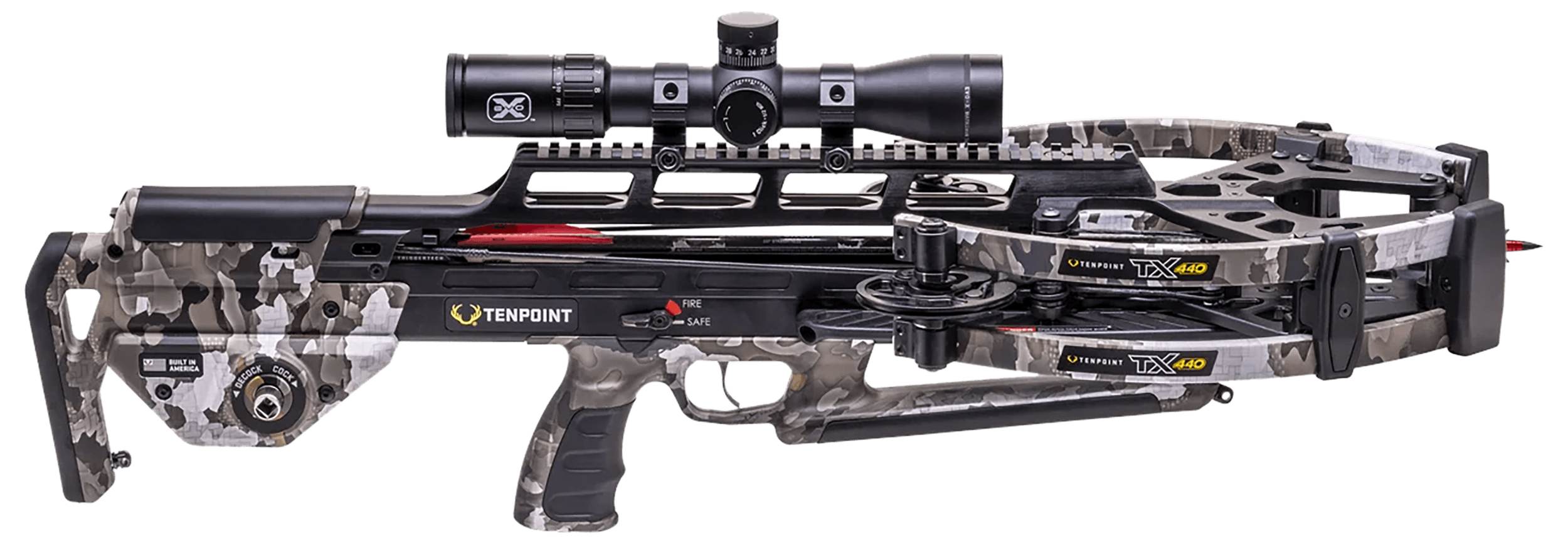
The TX 440 cocks down to just 6.5" wide — nearly 4 inches narrower than the R10X Pro's 10.5". In a tight treestand or ground blind, that's a real, measurable difference in how much bow you have to manage.
440 FPS versus 400 FPS is a genuine edge, translating to a flatter trajectory and slightly more margin for ranging errors at longer shots.
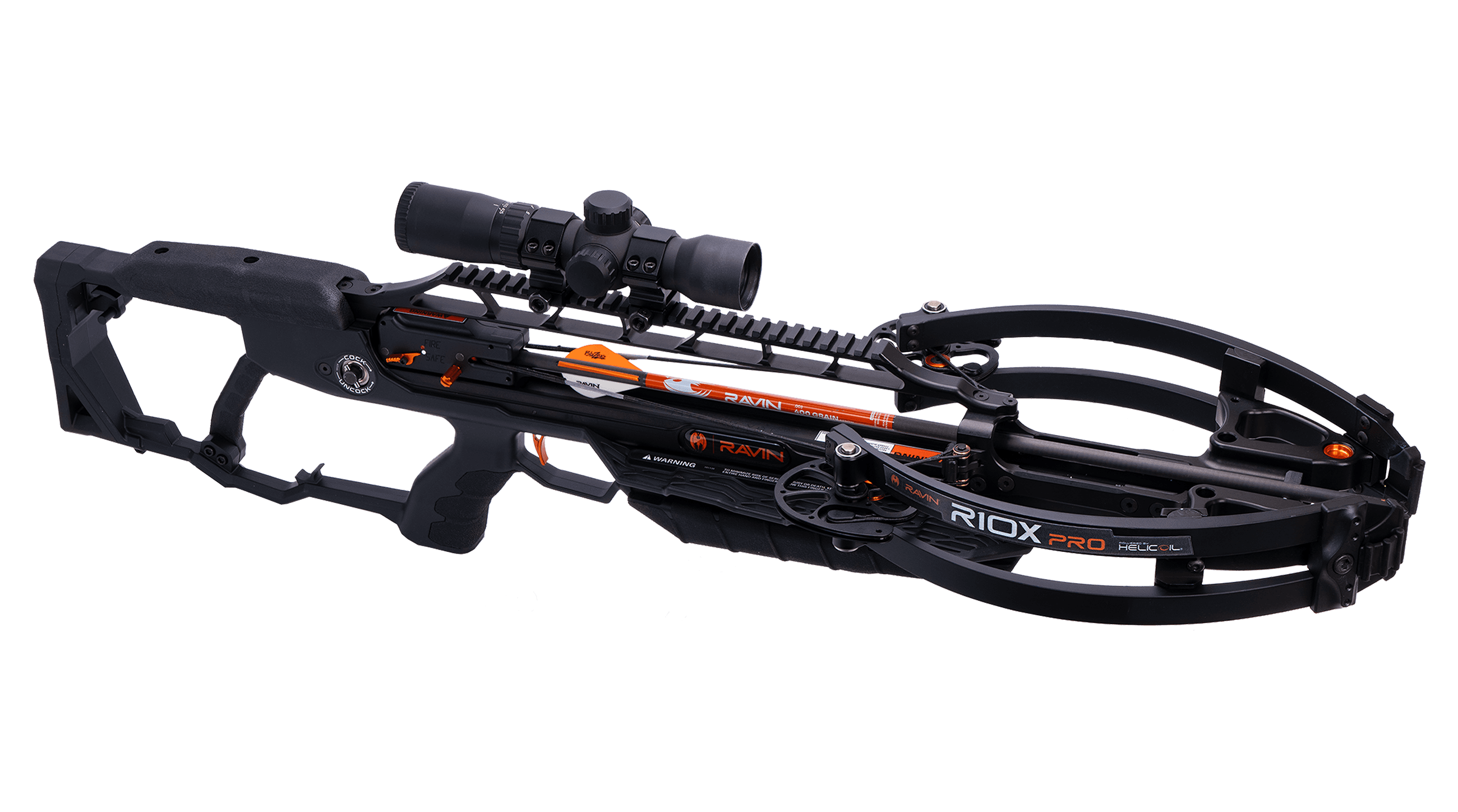
The R10X Pro costs about $750 less than the TX 440 and carries 0.4 lbs lighter at 6.8 lbs versus 7.2 lbs — a meaningful difference on a long day of still-hunting or hiking to a stand.
Ravin's Helicoil crank and TenPoint's ACUslide MAXX solve the same problem — quiet, low-effort cocking — with different engineering. Neither has a documented reliability edge over the other in the specs we track.
You want the lower price and the lighter carry weight, and you value Ravin's Helicoil cam system. The R10X Pro is the more budget-conscious of the two premium picks.
You hunt from especially tight stands or blinds where every inch of cocked width matters, or you want the extra speed the TX 440's 440 FPS delivers — and the higher price isn't a dealbreaker.
Both are premium, well-regarded crossbow brands. TenPoint's TX 440 is faster (440 FPS vs 400 FPS) and narrower when cocked (6.5" vs 10.5"). Ravin's R10X Pro is lighter (6.8 lbs vs 7.2 lbs) and less expensive ($1,849.99 vs $2,599.99). Which is "better" depends on which of those specs matters most for your hunting setup.
TenPoint's TX 440, at 6.5" cocked, is nearly 4 inches narrower than the Ravin R10X Pro's 10.5" cocked width — a real advantage in tight stands and blinds.
The TenPoint TX 440 shoots 440 FPS versus the Ravin R10X Pro's 400 FPS, per each manufacturer's published specs.
The TX 440 costs roughly $750 more than the R10X Pro. That premium buys a narrower cocked width and about 40 FPS more speed. For hunters who don't need the extra compactness or speed, the R10X Pro is the better value.
Use the full comparison table or the selector to compare crossbows by budget, skill level, and use case.